

Fletcher faculty offer insight on the General Assembly


The 81st session of the United Nations General Assembly—themed “Restoring Trust, Managing Transformation: A United Nations That Delivers for All”—is now underway in New York City. After opening on September 8, preparations are now ongoing for what is known as High-Level Week, beginning on September 22. During that time, global leaders will attend high-level meetings on Sustainable Development Goals and other major topics for the U.N., and deliver speeches on issues of global concern at the General Debate.
Ahead of the UNGA, Fletcher faculty and researchers have provided insight into how the U.N. functions, what they anticipate from this year’s General Assembly, and potential pathways for reform at the U.N.
This article will be updated with more insights from faculty throughout the UN General Assembly.
For media interview opportunities with Fletcher faculty and experts, please contact Katie Coleman at katie.coleman@tufts.edu.
New Initiative launched at UN General Assembly: Partners for Multilateralism

By Ian Johnstone, Professor of International Law
(October 1)
The General Debate in the UN General Assembly wrapped up on September 28. That marked the end of the week in each year when Presidents, Prime Ministers and Foreign Ministers show up in New York to tell the world what is on their minds. As per tradition, Brazil kicked things off, and President Lula took the opportunity extoll the virtues of diplomacy and multilateral cooperation. President Trump (US) followed him by threatening to annihilate Iran if diplomacy failed. Six days, 192 speakers, and many words of encouragement and despair later, it was done. “High level week” at the UN also included summit meetings on AI, climate change, the Sustainable Development Goals, pandemics, the Durban Declaration on racism, the elimination of nuclear weapons and other issues.
One initiative that got less attention than it deserved: a group of countries launched the Partners for Multilateralism. Canada, the EU, India, Brazil, Australia, Kenya and Barbados got together and declared their commitment to multilateralism, international law, peace and prosperity. They were quickly joined by 16 other countries and organizations.
What is this all about? In Davos last January, Canadian Prime Minister Mark Carney made a speech about the “rupture” in the world order. He quoted Thucydides’ famous aphorism that “the strong do what they can and the weak suffer what they must” and said, in effect, it was high time for middle powers to start looking out for themselves, joining forces with other middle powers as necessary. He didn’t name names, but his remarks were widely understood as an appeal to stand up to the US, China and Russia.
A less commented on feature the speech was an appeal to build back better. The so-called ‘rules-based order’ should not be abandoned by middle powers seeking to gain leverage against the great powers, but instead they should work together to build an order that is — in Carney’s words — “bigger, better, stronger and more just…”, one that encompasses “respect for human rights, sustainable development, sovereignty and territorial integrity”.
The Partners for Multilateralism (P4M) initiative launched eight months later is an extension of that, with a twist. Encouragingly, it is not only “middle powers” who are on board. It includes the EU and India at one end of the spectrum and Barbados at the other. And other states that have signed on include Croatia, Finland, Guatemala, Norway, Slovakia, Spain, Türkiye and Uruguay.
As of yet, the P4M has no concrete program of action, but the final words of the declaration make clear that the goal is to reform, not to jettison the existing global architecture: “The signatories to this declaration are committed to strengthen the multilateral system…Today, at a time of global transformation and mounting pressure on the international order, we choose cooperation, respect for international law, multilateralism and shared responsibility as the foundations of our collective efforts.” The pendulum may be swinging back.
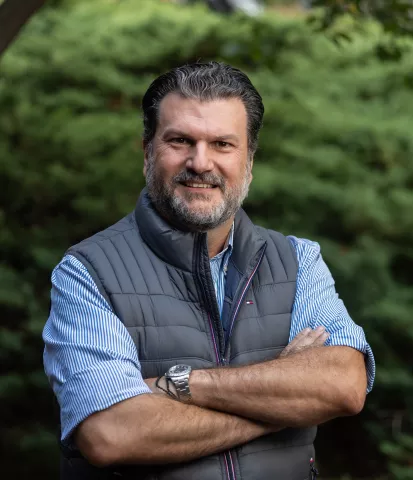
EU at the U.N. GA: Multilateralism and the Rule of Law must be upheld
(September 22)
The 81st U.N. General Assembly takes place at a very difficult time. The multilateral system, based on the U.N., and the respect and implementation of international law are being increasingly challenged by the newly adopted tendency of transactional bilateralism. Against this outlook the EU has adopted a specific agenda based on four priorities:
- Defend and develop an efficient, effective and inclusive multilateral system firmly rooted in the U.N. Charter and international law, including international humanitarian law and international human rights law.
- Advance reforms towards an effective, cost-efficient and responsive U.N. in the three interlinked pillars of peace and security, human rights and sustainable development, through partnerships and coalitions.
- Strengthen the U.N. peace and security architecture based on prevention and sustaining peace.
- Advance prosperity and sustainable development towards 2030 and beyond.
These priorities were unanimously adopted by all EU Member States, a rare occasion, at least recently. However, the real challenge lies with the will of the EU’s main transatlantic partner to pursue such objectives. Developments such as the US withdrawal from the UN Human Rights Council or the US offensive against the International Criminal Court indicate that there is a very rocky way ahead.
2030: Is It Possible?

(September 22)
A decade following the launch of the Sustainable Development Goals (SDGs), it is timely to discuss and evaluate the topic at the 81st U.N. General Assembly (UNGA). The theme "Together, we can do it" implicitly underscores the critical need for international collaboration in the remaining time. Achieving the 2030 vision, now less than five years away, requires secure financing, the effective mobilization of human and natural resources, and cooperation between nations.
What to expect at UNGA 81
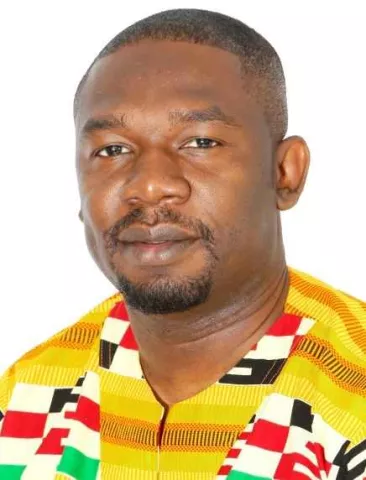
By Kwame Ababio, Research Fellow at the Climate Policy Lab and PhD Student
(September 16)
Secretary-General António Guterres will convene his final Climate Summit as head of the global body nearly a decade after the Paris Agreement entered into force, amid concerns raised in a recent UNEP Report that the 1.5°C target may no longer be achievable. While the impacts of climate change are becoming increasingly difficult to avoid, the energy transition continues to gather pace. In the first six months of 2026 alone, 19 commercial-scale clean technology projects worth approximately $43 billion were announced, more than double the value recorded during the same period the previous year. This combination of mounting climate risk and accelerating clean investment is likely to shape the outcomes of this UNGA, where wealthy nations will face renewed pressure to close the climate finance gap. Small island and coastal states will issue sharper calls for action, and tensions will persist between climate ambition and the geopolitical reality of strained multilateral budgets.
Additionally, geopolitical conflicts are increasingly reshaping global energy markets and complicating climate action. The 2026 Iran-US conflict has already reduced Gulf oil output by an estimated 10 million barrels per day, or about 10% of global demand, exposing the vulnerability of global energy supply chains. While higher fossil-fuel prices improve the competitiveness of renewable energy, they also encourage governments to prioritize energy security through subsidies and slower fossil-fuel phase-outs, while limiting developing countries' capacity to finance climate adaptation and resilience-building. There will be little appetite among major powers for a ceasefire, thereby reinforcing the tension between short-term energy security and long-term decarbonization commitments.
Beyond the climate discussions, the U.N. prepares for a leadership change, with Carolyn Rodrigues-Birkett of Guyana emerging as a frontrunner, followed closely by Rebeca Grynspan and Rafael Grossi in a straw poll. The contest is notable for another reason as the two leading candidates are women, raising the possibility that the U.N. could, for the first time in its 81-year history, appoint a female Secretary-General. Whoever takes office will, however, inherit an organization facing significant financial and institutional pressures. The U.N. entered 2026 with unpaid member state contributions totaling $1.59 billion, a reduced regular budget of $3.45 billion, and a workforce diminished by nearly one-fifth. Therefore, efforts to advance ambitious climate action will need to compete with the practical realities of institutional reform, capacity constraints, and a tightening fiscal environment.
Global Health Politicking Kicks Into High Gear

By Adam Kamradt-Scott, Cummings Foundation Associate Professor of One Health Diplomacy
(September 15)
Among all the usual politics that will take place during the UNGA in September this year, global health politicking will be in full swing. Officially, only one significant event is on the agenda, but unofficially campaigning for two major global health elections is already well underway. In terms of the official event, this September the UNGA will host the second High-Level Meeting on Pandemic Prevention, Preparedness and Response (PPPR). The meeting was originally scheduled in anticipation the WHO Pandemic Agreement would have been finalized, but while consensus was reached on the instrument’s main text (adopted in May 2025), negotiations surrounding what many perceive to be the operational heart of the treaty—an annex that outlines pathogen access and benefit sharing responsibilities—have proven especially contentious, delaying finalization of the treaty. Many of issues preventing consensus on the annex, such as how any vaccines, diagnostics and therapeutics derived from the sharing of pathogens with pandemic potential will be equitably shared amongst the international community in future pandemics, are likely to feature in the high-level PPPR meeting debates, but whether a diplomatic break-through could be reached on the sidelines remains to be seen.
Unofficially, UNGA will serve as a campaign stop for the serious contenders for two top global health jobs that will be decided next year. In May 2027 the World Health Organization (WHO) will elect a new director-general and campaigning for that election is now robustly underway with four candidates (so far) officially announcing their run. Of the current four, two candidates—Indonesia’s health minister The Hon. Budi Gunadi Sadikin and Saudi Arabia’s Dr. Hanan Balkhy—are already attracting much interest and are rumored to be the front-runners.
The second election underway is to find the new executive director of the Global Fund of HIV/AIDS, TB and Malaria (“Global Fund”). Due to secrecy around the election process candidates’ names are not currently public, but candidates’ names and qualifications are likely going to be the focus of much corridor talk ahead of the public phase of the election campaign kicking off on October 1, 2026.
On the 81st UNGA

By Chidi Anselm Odinkalu, Professor of Practice in International Human Rights Law
(September 15)
The 81st session of the U.N. General Assembly will arguably be defined by global and institutional transitions. In the background, there is the search for the 10th Secretary-General of the United Nations in a time of transitions of both missions and budgets for global multilateralism.
This year marks 40 years since the adoption of the U.N. Declaration on the Right to Development, and the forthcoming session should be an opportunity for a retrospective on that Declaration. We are also in the last five years of Agenda 2030, and the future of the Sustainable Development Goals (SDGs) will be on the minds and agenda of the various delegations.
The Inter-Governmental Working Group meeting on the negotiations for the Pathogen Access and Benefit-Sharing (PABS) Annex to the Pandemic Treaty will be taking place in Geneva during the General Assembly and it will be a huge bonus if the delegates were to reach a final agreement on the Annex during the UNGA session.
Of course, the UNGA is also a shopping complex for matters of significance to different parts of the world and to the international community in general. Amidst these transitions, one issue that continues to stick out like a sore thumb is the crisis in Sudan. With hundreds of thousands killed, nearly five million refugees, and about 15 million forcibly displaced, Sudan is by every metric of victimization the worst humanitarian crisis in the world. It is also the one crisis that is getting hardly any attention and surely not on the scale that it deserves. The African Union has failed the people of Sudan and, so far, the United Nations has not done much better. But it is not too late to help the hopes of the peoples of Sudan.
Three of Five: The Security Council's Restraint Problem

(September 15)
The Security Council's problem this year is not that its permanent members disagree. It is that three of the five now treat coercion as their first instrument of diplomacy rather than their last. Since 1991 the United States has intervened militarily abroad at a rate of roughly 4.6 times a year, a pattern of kinetic diplomacy in which soldiers replace envoys and peace is never planned. Afghanistan showed the cost. Washington won the war in 2001 and lost the peace in the same year, refusing to consider a Taliban surrender while Al Qaeda fled to the tribal areas of Pakistan. Russia has used force to hold a sphere in Ukraine that nationalism has made impossible to secure. China has not fired a shot, but its blockade drills, gray-zone pressure, and threats of control over Taiwan aim at the same end: acquiescence without war.
The reform debate should start there. Expanding Council membership will not fix a body whose veto holders no longer believe in restraint. What might is a General Assembly that reclaims its Uniting for Peace authority when a permanent member is itself the coercing party, and that ties legitimacy to a record of cooperative rather than coercive power. Power becomes order only when others have reason to remain inside it. Right now, fewer do.
The General Assembly Lacks Legislative Power

By Joel Trachtman, Professor Emeritus of International Law
(September 15)
Students and others new to the study of the United Nations may be forgiven for assuming that the U.N. General Assembly is a legislature. August and important as it may seem, its resolutions generally cannot create law binding on states. (The Security Council can adopt binding resolutions in limited contexts, subject to the veto power of each of the five permanent members, but that is a story for another day.)
The principal legislative mechanism in international law remains, as it has for centuries if not millennia, the treaty—and treaties bind only states that consent to them. Yet more international law is urgently needed to address climate change, biodiversity loss, the rise of artificial intelligence, pandemics, war, and poverty, to name only some of the problems that appear to require greater legislative capacity. The General Assembly not only is generally unable to make binding law, but it also operates according to the principle of sovereign equality: Tuvalu and India have the same formal voting power, with one vote each. On a per capita basis, that gives each Tuvaluan roughly 155,000 times the voting influence of each Indian.
The world needs a functional and fairer legislature capable of acting without unanimous state consent, with population appropriately reflected in its voting arrangements. This idea is not as fanciful or impractical as “realists” may assume. The European Union demonstrates that states can, by treaty, establish institutions with authority to adopt binding legislation through weighted voting arrangements.
Must the Next Secretary-General “Deliver?”
By Ian Johnstone, Professor of International Law
(September 15)
In the race for election of the next Secretary-General (SG), there is much emphasis on “delivery.” This is not surprising. The U.N. is known for being good at coming up with global roadmaps like the Sustainable Development Goals and Pact for the Future, or ambitious Christmas tree mandates for its peace operations, but not as good at delivering on them.
No doubt the U.N.’s relevance depends on it having a positive impact on the lives of people, not just negotiating goals. But that begs the question “deliver on what?” The least developed countries want the U.N. to deliver development assistance and help bridge the digital divide; the U.S. wants the U.N. to “go back to basics”, with a focus on resolving conflicts (but not through peace operations); China emphasizes global governance reform and respect for sovereignty; the EU wants to defend the multilateral system and counter the pushback against human rights. The current SG’s UN80 initiative aims to get member states to choose among these priorities. The next SG will have to manage the tensions those competing priorities create.
A bigger problem is that, if delivery is the only measure of the performance of the U.N., activities that have a short-term quantifiable impact will be prioritized over longer-term initiatives aimed at normative and structural changes, the impact of which is hard to measure. Moreover, it could dissuade the SG from taking diplomatic risks, for example by pursuing mediation efforts that might fail. Showing value for money is obviously important, but not at the expense of the normative and independent political role the SG can play.

Fletcher alum Ramiz Alakbarov of Azerbaijan has been appointed Assistant Secretary-General for Safety and Security.
Senior Fellow Jennifer Morgan was quoted in The Innovator about AI's place in conversation at the U.N. General Assembly and New York Climate Week.
Professor Ian Johnstone discusses the potential historic election of the U.N.'s first woman Secretary-General.
Senior Fellow Jennifer Morgan spoke to The Associated Press about how AI is likely to take a central role in climate debates at the UN General Assembly and New York Climate Week.
Jennifer Morgan, senior fellow at the Center for International Environment and Resource Policy and Climate Policy Lab, raises the need for real climate action coming out of UNGA 81 and COP 31.
Career diplomat and Fletcher alum Khalilur Rahman is serving as the president of the 81st United Nations General Assembly. Fletcher alum Ivor Richard Fung is also serving as Chef de Cabinet of the President.
In a piece for The Conversation, Professor Ian Johnstone discusses the race for a new UN Secretary-General.