

Fletcher faculty reflect on the value of the FIFA World Cup


This summer, amidst a period of strained international relations, the world is turning its attention to North America for the 2026 FIFA World Cup. Fans are traveling to stadiums across the United States, Mexico, and Canada, including Gillette Stadium—called Boston Stadium for the World Cup—about 30 miles from The Fletcher School.

“The World Cup acts like, what in game theory or general psychology we would call, a focal point,” said Carsten Kowalczyk, associate professor of international economics. “It is something that you have to relate to, whether you enjoy soccer or not. The probability of walking around and not being asked, ‘Did you watch any of the World Cup?’ is zero.”
The FIFA World Cup consistently draws the largest global television audience of any sporting event, outpacing even the Olympics.
“For many years, I have said that Fletcher should teach a course on soccer. It is an amazing connector, and I would encourage diplomats to put this in their toolbox, ” Kowalczyk shared. “It is a way to chat over coffee breaks, to share something positive, to share joy.”
The Importance of Hospitality, Sportsmanship, and Humility
For the U.S., which hosts this tournament during significant geopolitical tension, Kowalczyk sees the event as a kind of opening. The World Cup’s universality extends beyond fandom, offering an opportunity for sports diplomacy.

“We could surprise others, in a good way,” Kowalczyk explained. “There's a long history of hospitality and kindness in the U.S. Sportsmanship is held in high esteem.”
The openness runs in both directions.
“We can learn about foreigners, fans or teams, how they interact, and find that we probably share more with people outside this country than we might think," Kowalczyk said.
In a sport that the U.S. has not historically dominated, there is something instructive in the experience of being one competitor among many.
“It shows us that we are one of many pieces on this global chessboard," Kowalczyk said.
A Bright Stage for Cape Verde
Donald L. Heflin, senior fellow, plans to travel to Miami to watch Cape Verde face Uruguay. As the former U.S. ambassador to Cape Verde from 2015 to 2018, Heflin feels immense pride. Cape Verde is the second smallest nation to ever qualify, and the archipelago nation off the coast of West Africa reached a historic tie with Spain in their game on June 15.
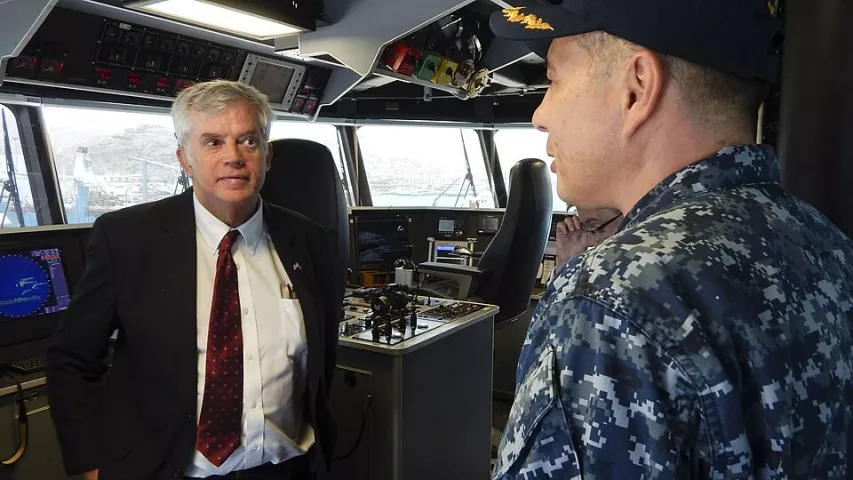
Heflin describes Cape Verde as a country where sports and outdoor activities are important and enjoyed by everyone—a sentiment that the World Cup helps make possible on a global scale.
“For two months, nations will lay aside their differences, young soccer heroes will delight their fans and inspire children, and some of the best soccer to be seen will be played on U.S. soil,” Heflin says. “Lifelong friendships will be formed, and some will ask why can’t international relations between countries be as smooth as relations between their citizens?”
Of course, this year’s World Cup is not immune to the international challenges surrounding it. In some ways, it can even hold up a mirror to international affairs.
“The worldwide petroleum crisis and resulting high airfares will limit who’s able to attend,” Heflin said. “The same is true of the slowdown in visa processing. Most attendees will have already-existing visas or be from the minority of countries that enjoy visa-free travel to the U.S. As Ebola continues to spread, players from at least one country will have to quarantine.”
A Showcase for Coexistence
“The World Cup can be a showcase for coexistence,” wrote Chidi Odinkalu, professor of the practice of international human rights law, in a recent Tufts Now op-ed. But awkward political and diplomatic subtexts, he noted, have never been far from the tournament.
From Uruguay's independence-charged stadium in 1930, to Mussolini's Italy in 1934, to Argentina’s military dictatorship in 1978, the World Cup has both reflected and been shaped by the political tensions of its era.
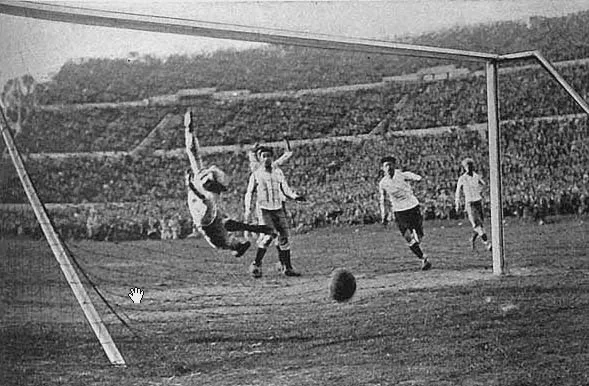
This summer will be no different. The first match in Boston took place on June 13 between Haiti and Scotland.
“For Haiti, the site of the first successful slave revolt in the world and a country affected by current U.S. immigration restrictions, there is evocative irony to the fact that it will play its first-ever World Cup match in the Boston area, once a hub in the transatlantic slave trade,” wrote Odinkalu.
“This absorbing interplay of history, memory, identity, skill, and athletic ability is why the FIFA World Cup continues to evoke passion on a scale unknown to any other single sporting event,” Odinkalu added. “Whether it will leave any lasting legacies on the major questions facing our world today will be debated long after a winner is settled on July 19.”
The Spirit of Cooperation
For Kowalczyk, who grew up in Denmark, a memory from the 1992 UEFA European Championship Final offers an illustration of sports diplomacy in action. Denmark was facing Germany, and both Helmut Kohl, the German chancellor, and Uffe Ellemann-Jensen, Danish foreign minister and a prominent figure in European affairs, were in attendance.

The timing was charged. Not long before the final match, Denmark had voted against the Maastricht Treaty, a proposal to further integrate the European Union. The vote had thrown the entire process into uncertainty since it required unanimity among member states.
“These guys are sitting there watching the game, and the Danes win to enormous surprise,” Kowalczyk recalled. “After the game, Foreign Minister Ellemann-Jensen said, ‘Well if you can't join them, beat them.’”
“He was playing light-hearted around the sport, but also commenting on international affairs,” Kowalczyk added. “I think it shows the need to—even when things are difficult—put a smile on and say, ‘We'll keep at it, we'll keep cooperating—around games, sports, economics, international trade.’”
For Kowalczyk, this spirit is inseparable from the nature of soccer itself.
“It's a team sport,” Kowalczyk said. “You can be excellent at soccer, but you cannot win a soccer game on your own.”